
Hydronic (Water) Underfloor Heating Systems South Africa
Safe Up to between 70 and 90% on your home heating cost with Water based Underfloor Heating from Synergy.
Hydronic underfloor heating offers a quiet, energy-efficient way to warm South African homes. By circulating warm water through a network of pipes embedded beneath your floors, this system delivers even, comfortable heat without the dry, stuffy feel of traditional radiators. Ideal for SA climates and well-suited to solar PV and heat-pump integrations, hydronic floor heating can help you tighten energy costs while keeping indoor spaces consistently cosy – even during the coldest winter nights.
How it works
Hydronic underfloor heating operates by circulating heated water through a closed-loop network of pipes embedded within the floor, delivering consistent and even warmth throughout a residence. As a closed system, the water is continuously recirculated after initial commissioning and does not require ongoing refilling.
The water can be heated using a wide range of energy sources, including conventional gas boilers or renewable technologies such as solar panels and high-efficiency heat pumps. When paired with a renewable energy source, this system minimises electricity consumption and offers an environmentally sustainable solution.

Benefits Of Hydronic (Water) Underfloor Heating
Silent comfort
Save energy and the environment
Future Proofing and Maximising Return on Investment
By utilising energy-efficient heat sources currently available, you can reduce your home heating costs by up to approximately 70%. Hydronic underfloor heating systems allow for seamless integration of even more advanced heat sources as technology evolves. Additionally, the oxygen barrier PEX piping features a life expectancy of up to 50 years, eliminating the need for premature replacement and thereby enhancing both your return on investment and overall comfort.
Hygienic, Safe & Easy to Maintain
- Warm, dry floors help inhibit the proliferation of house dust mites. Coupled with minimal air movement, hydronic underfloor heating offers notable health advantages, particularly for individuals with allergies or asthma.
- Eliminating the risk of injuries associated with radiator panels, this system represents an ideal solution for environments such as schools, nursing homes, hospitals, other public facilities, and homes.
- With minimal mechanical components and straightforward single-step room temperature control, hydronic underfloor heating systems are both user-friendly and require minimal maintenance.
Freedom and Flexibility of Design
- The fully concealed heating system eliminates concerns regarding visible air ducts or large heaters that may disrupt interior design concepts.
- Installed within the building slab or floor screed and managed by advanced control systems, hydronic underfloor heating delivers a secure and tamper-resistant solution.
- Utilising the entire floor as an expansive heat source, this system requires only moderately warm water (35°C–45°C), making it compatible with renewable energy solutions such as solar and geothermal, as well as conventional sources including gas and high-efficiency heat pumps.
System Design, Floor Buildup and Components
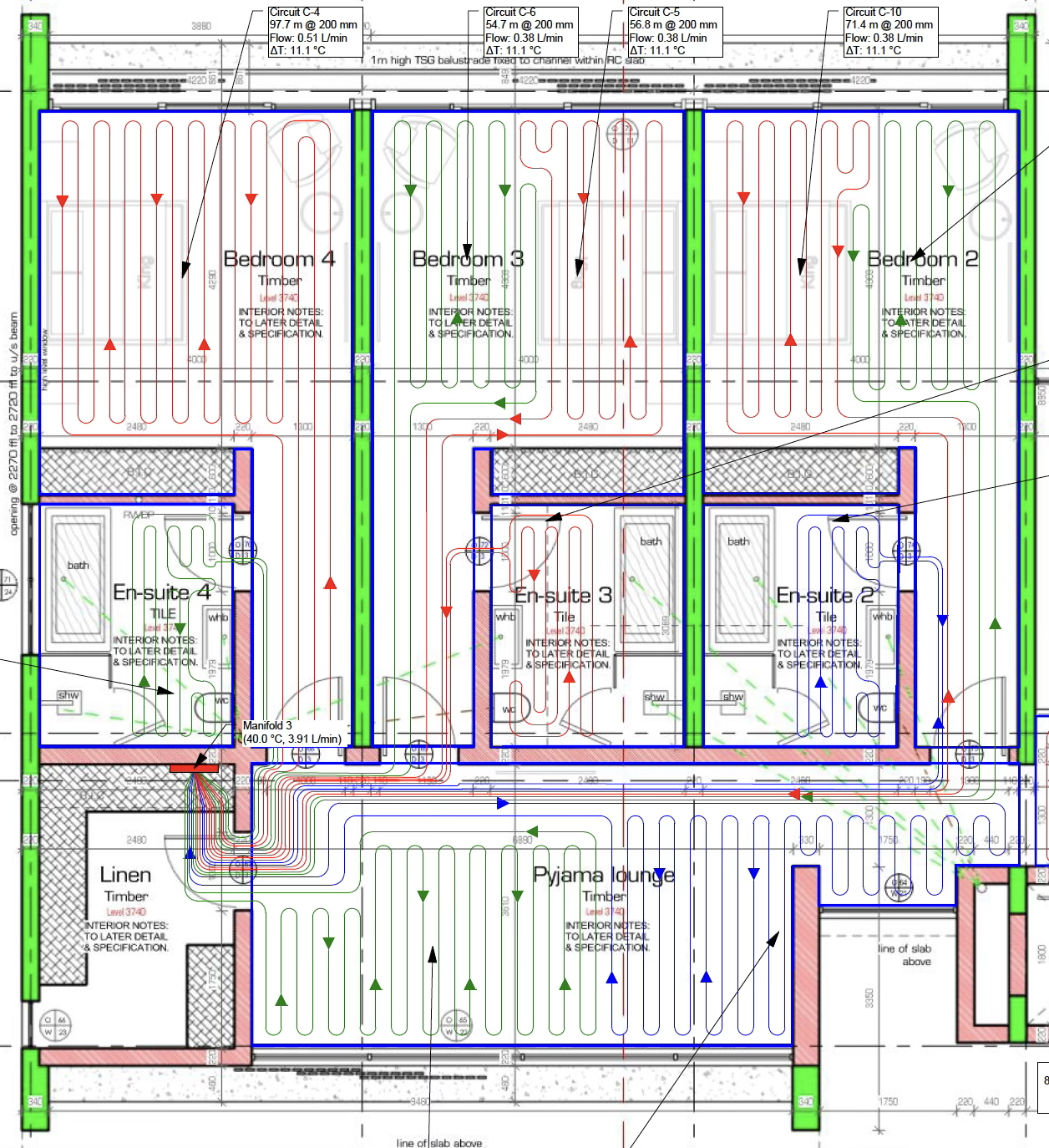
System Design
Each system is tailored to the specific needs and requirements of the customer, with a strong emphasis on achieving optimal results and maximizing energy efficiency.
The system is also suitable for most floor finishes.
Floor Buildup
Hydronic underfloor heating can be installed either within the building’s concrete slab or in the floor screed above it. Placing tubes in the concrete slab retains heat well and is less affected by open doors or windows but takes longer to warm up initially due to the large concrete volume. Installing tubing in the screed allows faster initial heating, though the floor becomes more sensitive to colder temperatures.
The minimum screed thickness for installing floor tubing is 40mm, though we recommend 65mm. The required screed thickness excludes the 20mm floor finish, which should be added separately.
Schedule a free site assessment today.
System Components
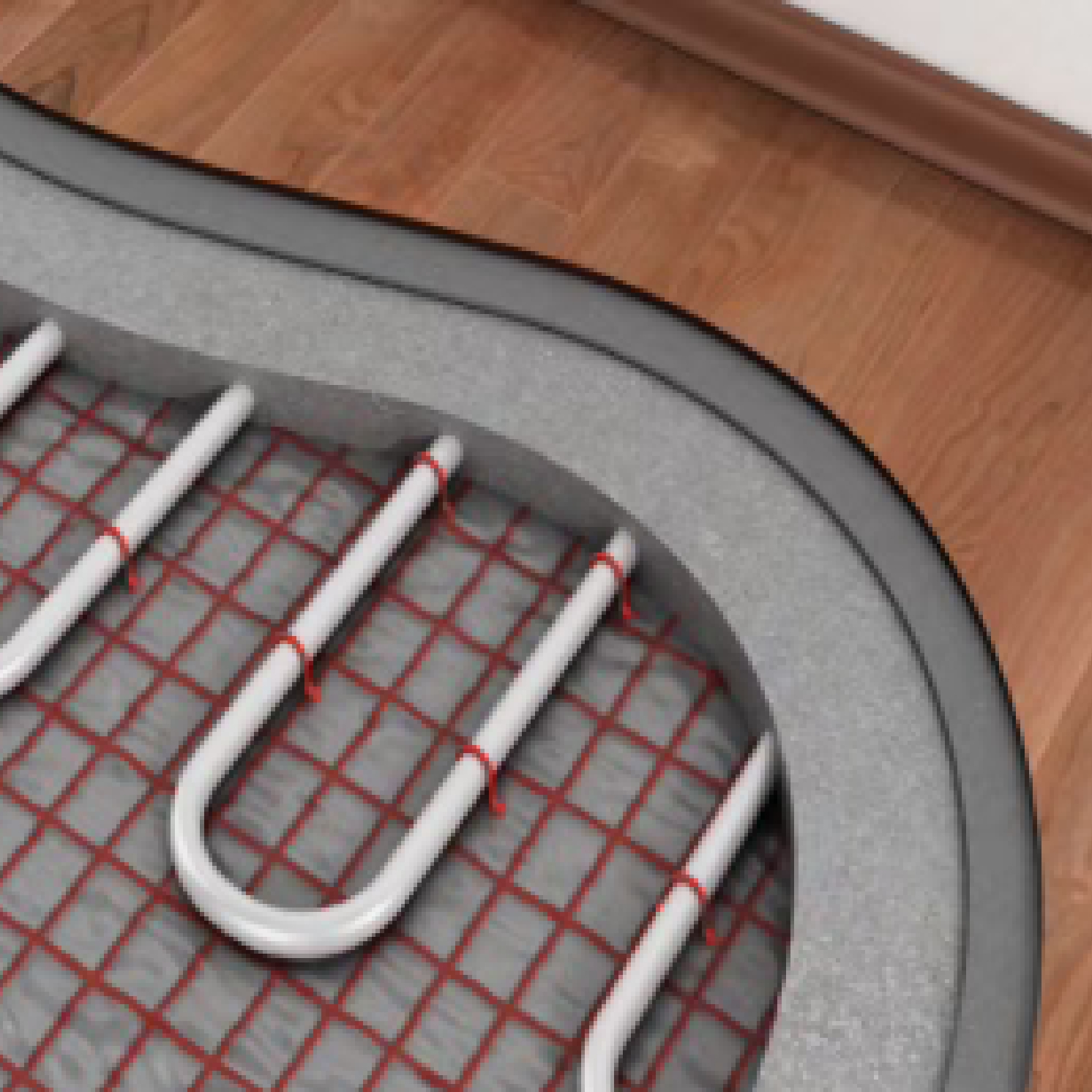
Underfloor heating Pipes
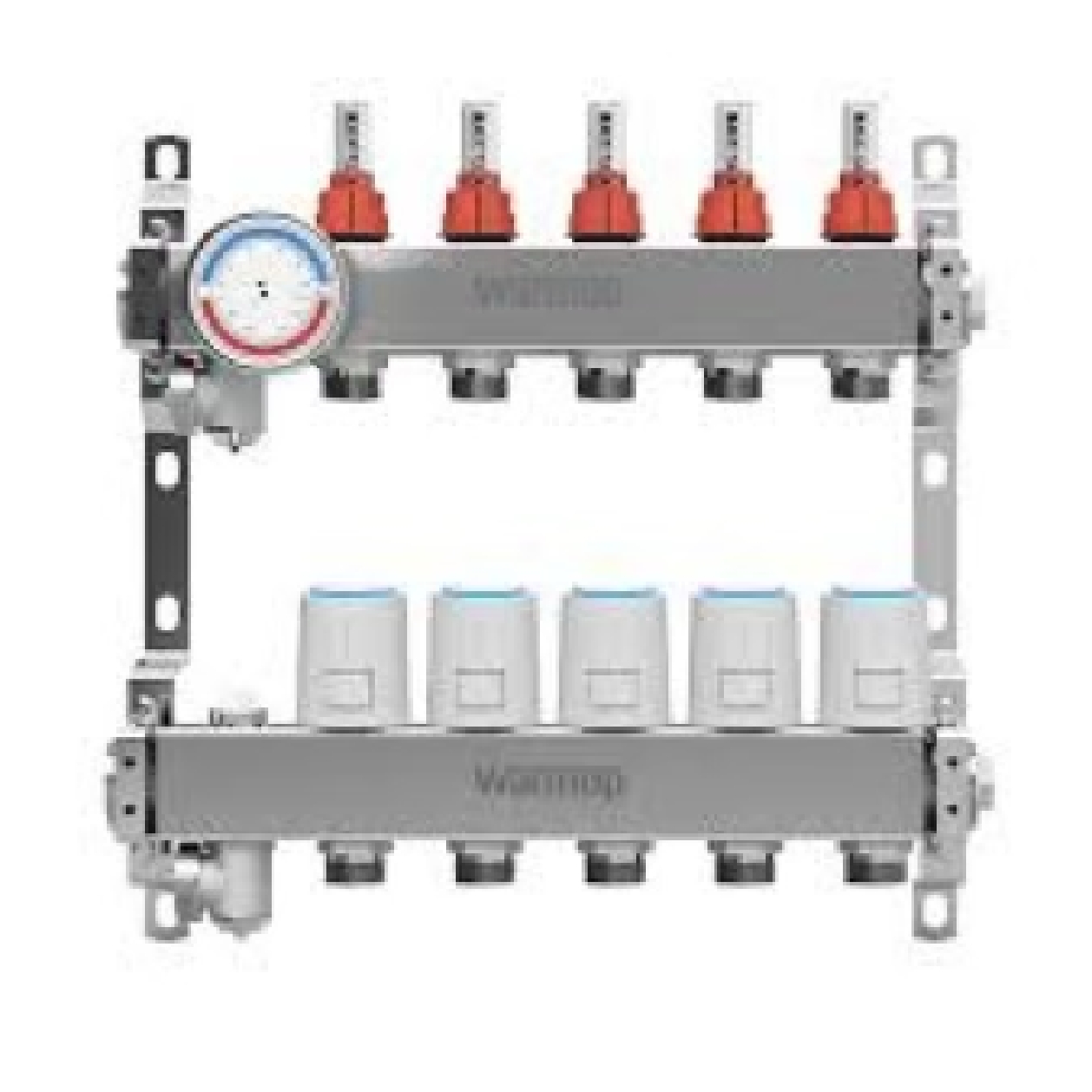
Manifold and Actuators
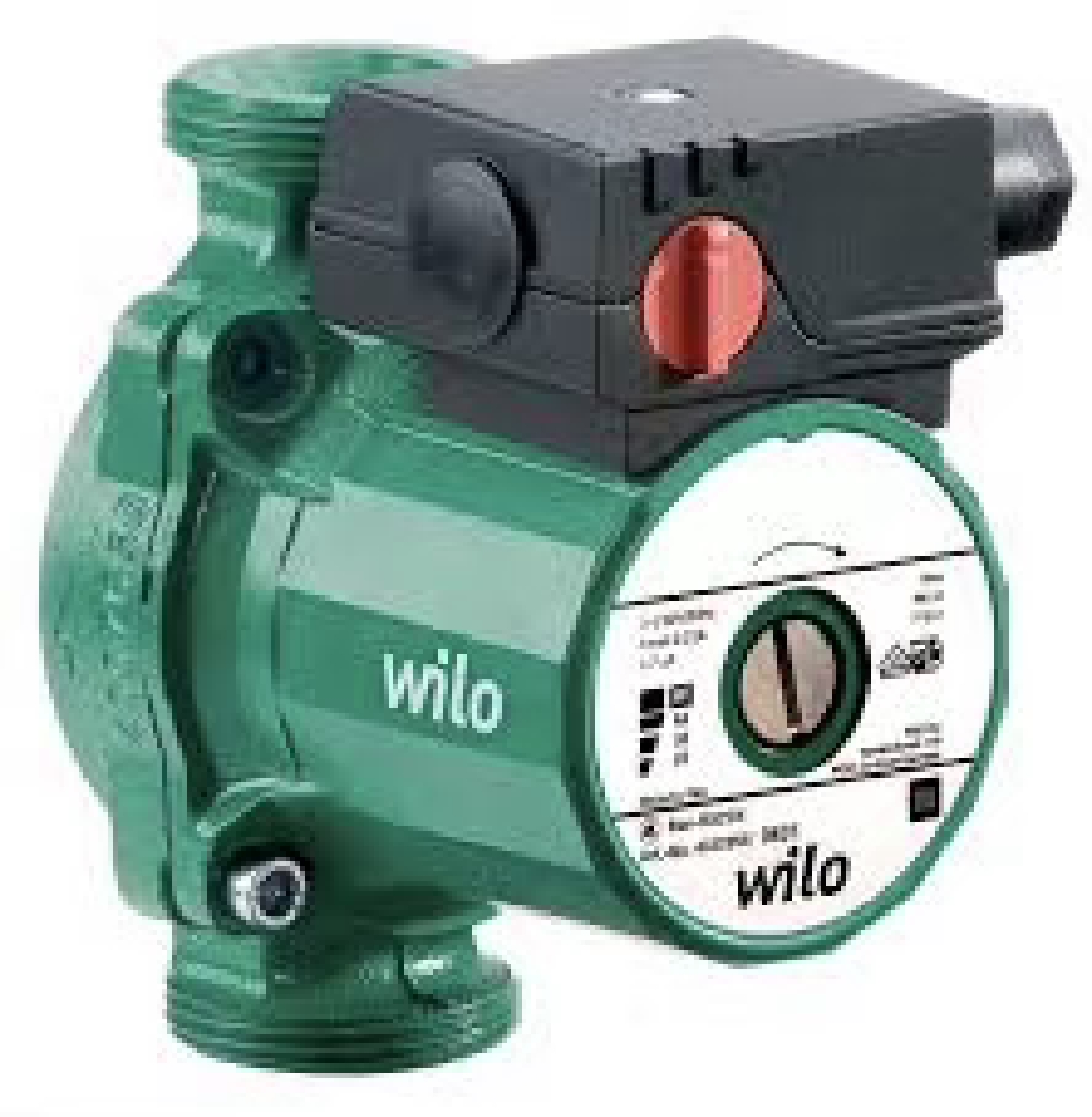
Circulation Pumps
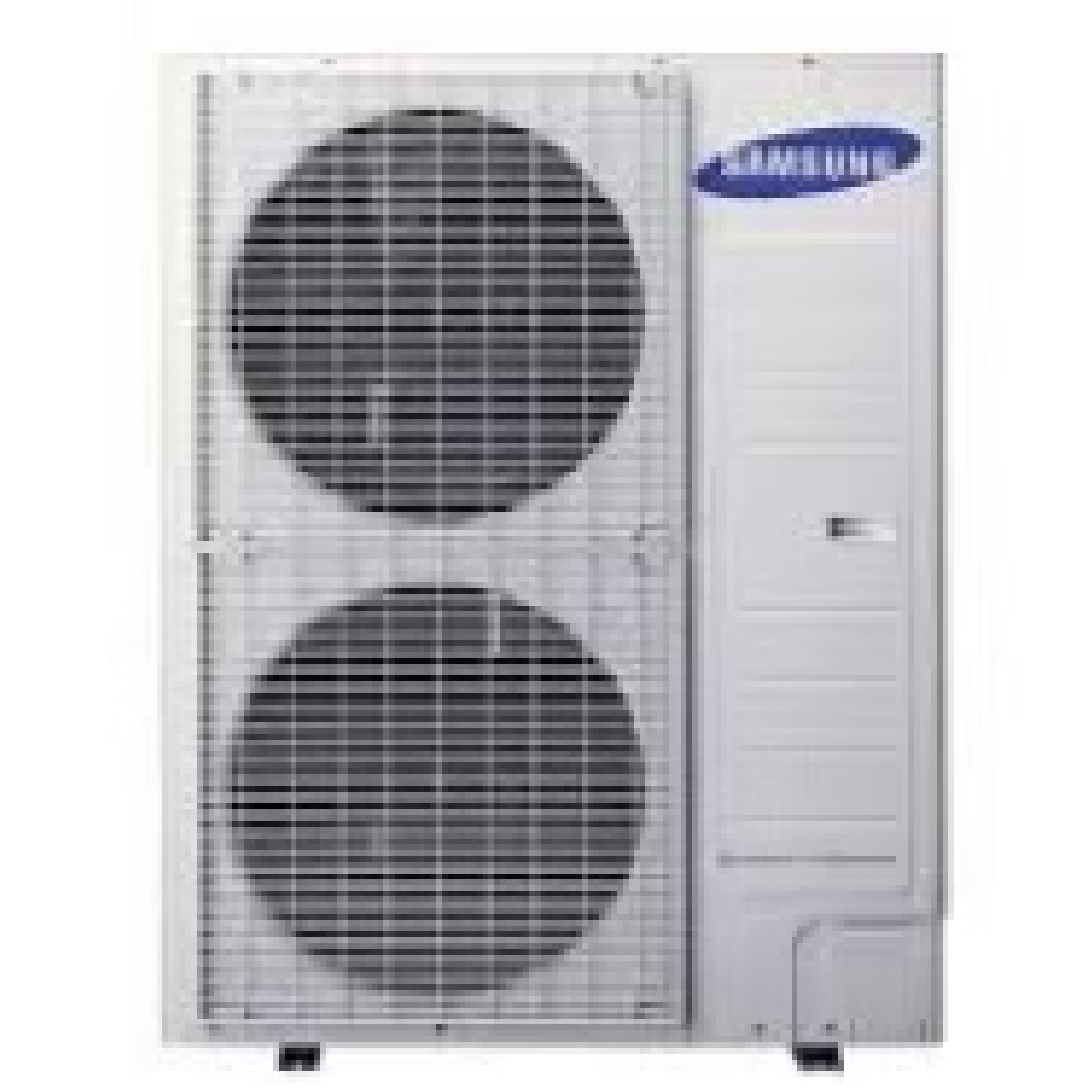
Heat Sources
The heat source warms the water, which is then sent through the manifold to each room. Various types or combinations of heat sources can be used for underfloor heating systems, including:
- Electric boilers
- Gas and diesel boilers
- Biofuel heaters
- Solar power
- Fixed speed heat pumps
- Inverter heat pumps

Thermostats and Controls
FAQ’s
Can I install water underfloor heating in an existing home or is it only for new homes that are being build?
Answer: Yes, you can install water underfloor heating in existing homes, however it is costly as the existing floors will have to be removed. As well attention will have to be given to the minimum screed requirements and the type of floor finish.
How thick should the screed be to install the underfloor heating system?
Answer: We recommend that a screed thickness of between 40mm to 70mm be applied. On top of the screed the floor finish is between 5mm up to 25mm depending on the type of floor materials used. The thickness of the screed will also determine what type of floor finish can be used the thinner the screed we would not recommend using a polished floor screed.
Is it recommended to install insulation under the floor heating pipes?
Answer: Yes, we do recommend installing insulation either with insulation under the concrete slab or on top of the slab, but this will affect the floor build up. Installing insulation can reduce the heat loss by up to 10% making your system more efficient and cost effective to run. However, should it not be possible to install insulation we can overcome the slight loss of energy by adjusting the flow per zone, adding run time on the system and increasing the heat source capacity.
Can I do only a few rooms in my house like only the bathrooms and the living areas?
Answer: Yes, you can but the smaller the area the higher the cost per m2 because in many cases a small area would still require a heat pump that will be capable to heat a larger area. This has to do with the sizes of the heat pumps as well as the manifolds. So, when planning to do water underfloor heating speak to us so we can design a cost effective and efficient system for you.
How do I control the temperature of the system?
Answer: The temperature can be set by means of either 1 thermostat in each area to control the temperature individually for each area or 1 master thermostat to control the entire area.
What kinds of heat sources are used?
Answer: Various heat sources can be used such as heat pumps, Inverter Heat Pumps, Gas boilers, Electric Boilers and Biomass Boilers. You can also use a combination of heat sources to increase efficiency.
What does it cost per m2 to install Water Underfloor heating?
Answer: The cost depends on the size of the system, Type of heat source, Type of system control and temperature management and complexity of the system but the average costs are between R 700.00 to R1300.00 per m2
What our clients are saying


We are Members of


The PV GreenCard is an industry led quality label that is inclusive in nature and becomes the key to ensure a high standard of quality for small-scale Solar PV installations.

